
How California Community Colleges Are Strengthening Support for Adult Learners: Project Milestones, Resources, and Insights from the UDW Adult Learner Demonstration Project
By Jasmine McGee and John Brauer
In this blog post, we share recent milestones from the United Domestic Workers Adult Learner Demonstration Project, including lessons from the third annual Project Summit, the launch of a new statewide Toolkit, and plans to continue building pathways that are more accessible for adult learners.
Adult learners bring experience, determination, and clear goals to their educational journeys. They may also be balancing employment, caregiving, financial responsibilities, and a return to school after years away from the classroom.
For colleges, supporting these learners requires more than offering a new program or service. It requires looking closely at how students experience the institution—from their first interaction with a college through enrollment, persistence, completion, and connection to career and economic opportunity.
Reflecting on 3 Years of Implementation
Over the past 3 years, the California Community Colleges’ United Domestic Workers (UDW) Adult Learner Demonstration Project has helped participating colleges examine that experience and test new ways to reach and support adult learners.
Since our last blog post, the project has reached several important milestones. Colleges and partners gathered for the third annual UDW Project Summit, the UDW Adult Learner Demonstration Project Toolkit launched in May 2026, and project leaders began shaping the continuation of the work beyond the initial demonstration period.
Together, these developments mark the next chapter of the project; turning 3 years of implementation and shared learning into resources and practices that can support colleges across California.
Bringing Partners Together at the 2026 UDW Project Summit
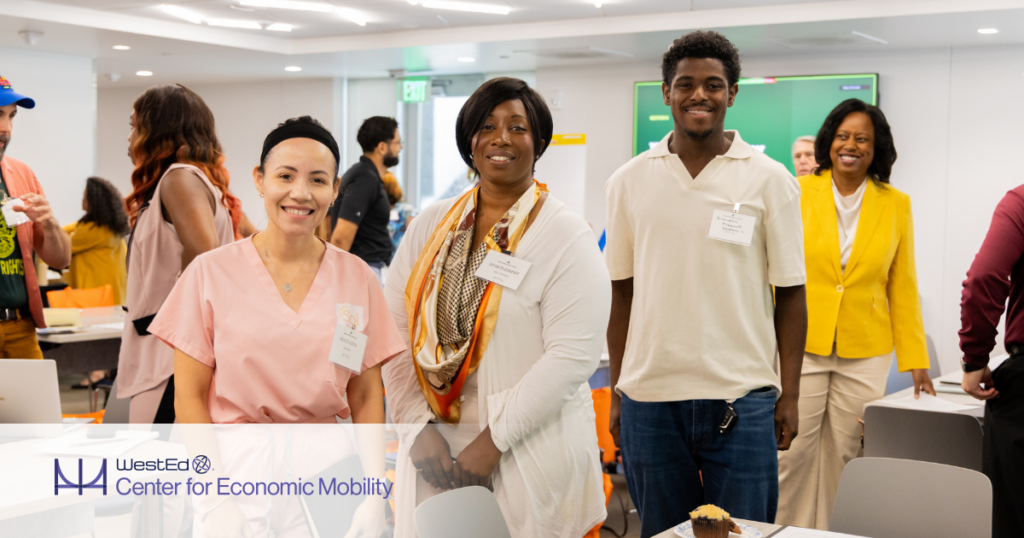
The 2026 UDW Project Summit brought participating colleges, project partners, and system leaders together to reflect on what the demonstration project has accomplished and what the work has revealed.
Colleges shared how they have adapted outreach, enrollment support, student services, programs, and partnerships to better reflect the realities of adult learners. Although each institution has approached the work within its own local context, their experiences point to several common lessons.
One of those lessons is that adult learner outreach is most effective when it speaks directly to learners’ goals, experiences, and responsibilities. Enrollment and navigation processes work better when they are clear, coordinated, and supported by a consistent point of contact. Flexible scheduling matters, but flexibility must extend beyond the classroom to advising, financial aid, career services, and other supports.
Colleges also emphasized the importance of partnerships. Connections among academic programs, student services, career centers, employers, unions, and community organizations can help create a more coordinated pathway into and through college.
The Summit created space to celebrate these advances while also acknowledging the challenges that remain. Colleges continue to navigate limitations related to data, staffing, scheduling, cross-department coordination, and the long-term integration of new practices.
These challenges are not separate from the project’s learning. They help clarify what must be addressed for adult learner strategies to move from promising pilots to sustained institutional practice.
Sharing the Learning Through a New Toolkit
In May 2026, the project launched From Enrollment to Employment: A Toolkit for Adult Learner Support.
The Toolkit brings together lessons, strategies, and practical resources developed through the experiences of participating colleges. It is intended for institutions that want to strengthen existing adult learner efforts or take the first steps toward a more intentional approach.
The Toolkit does not prescribe one model for every college. Instead, it provides a shared framework that institutions can adapt to their students, communities, programs, and partnerships.
Its resources support colleges in examining several areas of implementation, including
- outreach and recruitment,
- student navigation and support,
- program and service design,
- institutional and community partnerships,
- data use and continuous improvement, and
- sustainability.
Colleges can use the Toolkit to take stock of what they already do well, identify gaps in the student experience, and determine where targeted changes could make the greatest difference.
The launch is an important project milestone because it extends the value of the demonstration beyond the original participating institutions. The lessons generated through local implementation can now support broader conversations and planning across the California Community Colleges system.
What Colleges Are Learning About Adult Learner Success
One of the project’s clearest lessons is that practices that appear routine from an institutional perspective can become significant barriers for adult learners.
Participating colleges have responded by testing approaches that are more coordinated. These include targeted communication, hands-on enrollment assistance, stronger student navigation, increased collaboration across departments, and deeper relationships with organizations that already have trusted connections to adult learners.
A process may require visiting several offices, attending during limited business hours, submitting of information, or unfamiliar terminology without guidance. For a learner balancing work and family responsibilities, each additional step can make it harder to enroll, persist, or return the following term.
The project has also reinforced that enrollment is only one measure of progress. Colleges and project partners are continuing to consider how to assess persistence, completion, student experience, workforce outcomes, and the institutional changes that make improvement possible.
This broader view of success matters because the goal is not simply to help adult learners enter college. It is to create conditions that help them continue, complete, and connect their education to their longer term goals.
Continuing and Deepening the Work
The first 3 years of the demonstration project created a strong foundation, but they also made clear that meaningful institutional change takes time.
Project partners are now planning for the continuation of the UDW Project and identifying how the next phase can build on what colleges have learned. This work includes clarifying statewide outcomes, defining partner roles, strengthening implementation priorities, and determining how success should be measured beyond initial enrollment.
The next phase will focus on deepening college implementation while translating project learning into practices that can be sustained and applied more broadly.
Priorities under consideration include strengthening adult learner pathways from outreach through completion, improving the use of data, deepening workforce and community partnerships, supporting colleges in applying the Toolkit, expanding technical assistance and peer learning, and integrating effective practices into regular college operations.
The continuation of the project also creates an opportunity to align this work more closely with systemwide priorities, including the California Community Colleges’ Vision 2030 goals related to access, equity, completion, workforce development, and economic mobility.
What Comes Next
The UDW Project began with a charge to help colleges innovate or expand their frameworks and offerings for adult learners. Three years later, it has produced more than a collection of individual college initiatives.
The UDW project has built a community of practice, generated a growing body of implementation knowledge, and created a resource that can help other colleges examine their own systems.
The next chapter is about continuing to learn, build, and scale while keeping the experiences and goals of adult learners at the center.
Colleges and partners can begin by exploring the UDW Adult Learner Toolkit, reflecting on how adult learners experience their own institutions, and identifying one area where a more coordinated or flexible approach could remove a barrier.
For more information, please contact the Center for Economic Mobility at [email protected].
Jasmine McGee has 15 years of experience in the nonprofit, public, and private sectors. Her areas of expertise include data-informed approaches and trends, student centered strategies, K-16 education, and data systems, with a focus on underserved populations. She has worked in education services in Northern California at organizations like East Oakland Youth Development Center, College of Alameda, American River College, and Youth Radio. Jasmine received a BA in psychology and African American studies from the University of California, Davis, and an MA in counseling from the St. Mary’s College of California.
John Brauer specializes in workforce development, focusing on apprenticeships, high-road training partnership creation, labor-management partnerships, WIOA systems alignment, workforce development best practices, green jobs, CTE, job quality, industry needs assessments, and sector partnerships. He works to strengthen connections among education systems, employers, and labor organizations. His background includes serving as Workforce Director at the California Labor Federation, leading the Oakland Army Base Workforce Development Collaborative, and working as an Alameda County Planner. John spent 11 years as an appointee on California’s Workforce Development Board under Governors Brown and Newsom and has served on Oakland’s Workforce Development Board. He has a BA in political science from UC Berkeley and an MPA from California State East Bay.